Cross-Border Disputes: Best Practices for Global Litigation Management
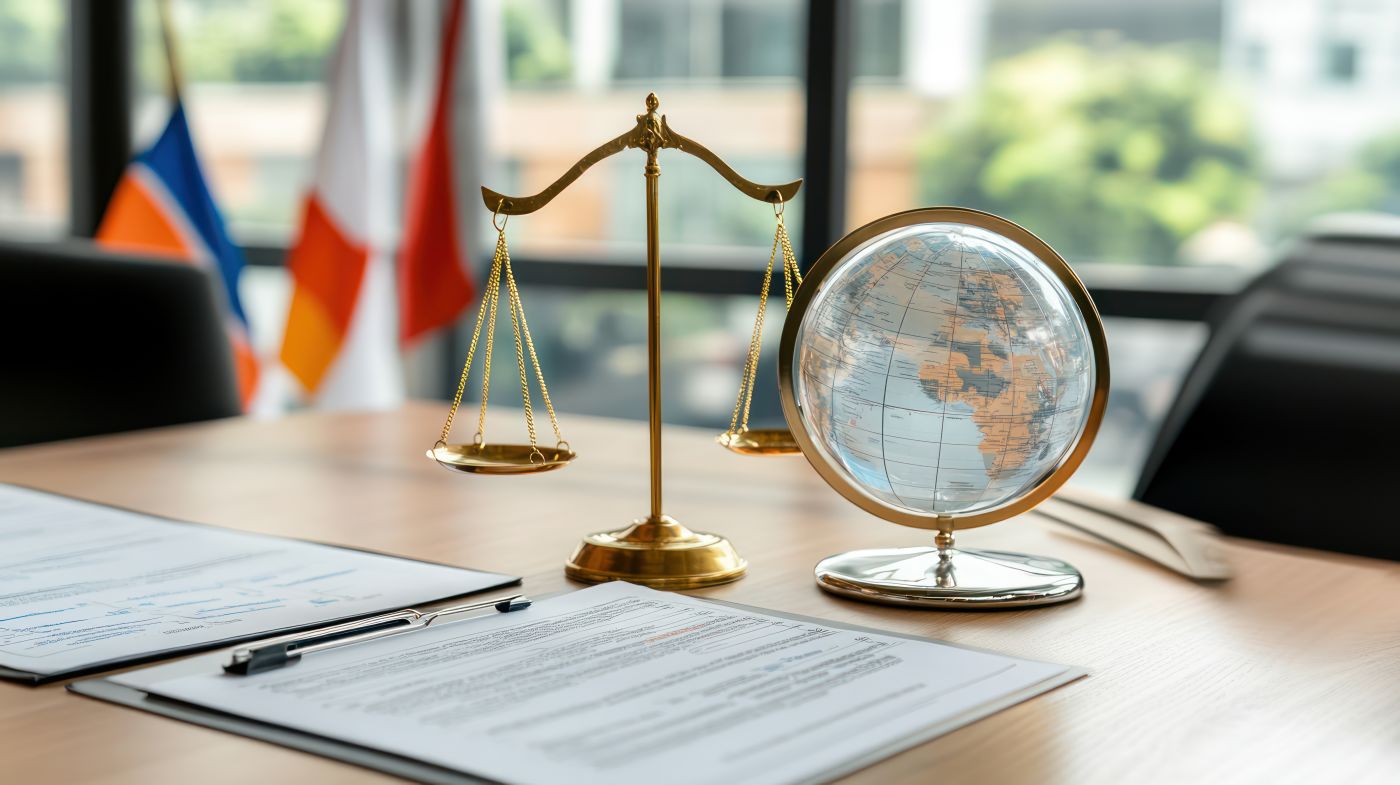
When legal battles cross international borders, you aren't just dealing with one set of laws anymore. Instead, you are juggling multiple jurisdictions, conflicting regulations, and logistical headaches that can slow your business to a crawl.
At David L. Cohen, P.C., we know exactly how cross-border disputes feel because we handle them every day. Led by David L. Cohen, an attorney with deep experience in international business law and intellectual property, our firm stands out because we don't just react to problems—we anticipate them.
Based in New York, New York, we serve clients throughout the United States and worldwide. Whether you are a local startup facing a foreign lawsuit or a multinational corporation managing a global portfolio, our goal is to help you protect your assets and resolve conflicts efficiently, no matter where they arise.
Cross-border disputes occur whenever a disagreement involves parties in different countries. This could be a breach of contract between a supplier in China and a distributor in the US, an intellectual property theft case involving European markets, or a shareholder dispute spanning multiple continents.
The main issue isn't always who is right or wrong. Often, the biggest hurdle is deciding where the fight should take place. This concept, known as "jurisdiction," dictates which court has the authority to hear the case. If you don't have a clear strategy, you might find yourself fighting a lawsuit in a country where the laws are unfavorable to you, or worse, fighting the same battle in two countries at once.
We always advise our clients to look at the big picture. Winning a judgment is great, but enforcing it is what matters. If you win a lawsuit in New York but the defendant has no assets there, you still have work to do. You need to take that judgment abroad and ask a foreign court to recognize it. This reality shapes how our firm approaches global litigation from day one.
One of the biggest mistakes companies make is hiring separate legal teams in each country without a central coordinator. This leads to disjointed arguments and wasted money. To manage global litigation effectively, you need to establish a centralized strategy.
At David L. Cohen, P.C., we act as the quarterback for your legal defense or offense. We will coordinate with local counsel in foreign jurisdictions to make sure everyone is on the same page. Consistency is vital. If your lawyer in France argues that a contract is valid, but your lawyer in Germany argues it isn't, you create a potential weakness that the other side can exploit.
A centralized approach also helps with cost control. Legal fees can spiral out of control when multiple firms are billing for the same research. We can help you streamline this process by managing your workflow to prevent task duplication. We keep the goal clear: resolving the dispute in a way that supports your business objectives.
Ideally, litigation management begins before a dispute arises. It begins when you draft your contracts. Every international agreement should include explicit "Choice of Law" and "Choice of Forum" clauses.
A "Choice of Law" clause specifies which country's laws will govern the contract. A "Choice of Forum" clause specifies where any disputes will be heard. Without these, you are leaving your fate up to chance.
For example, let's say you are a New York software company licensing a product to a firm in Brazil. If the Brazilian firm stops paying, you want to sue them in New York under New York law. If your contract is silent on this, the Brazilian firm might sue you in Brazil first, forcing you to navigate a legal system that operates in a different language and under different rules.
Our attorney is dedicated to helping you and your business carefully review and draft these clauses. We examine where the counterparty has assets and which jurisdictions are likely to enforce a U.S. court judgment.
In the United States, "discovery" is a broad process where both sides must share relevant documents and emails. In many other countries, discovery is much more limited or non-existent. This mismatch can cause serious friction during cross-border litigation.
If you are sued in the U.S., you must preserve all relevant data immediately. This is called a "litigation hold." Failing to do this can lead to severe penalties. However, data privacy laws in other countries, such as the GDPR in Europe, may make it illegal to transfer certain personal data to the U.S. for litigation purposes.
At David L. Cohen, P.C., we can help you identify what data needs to be preserved and find lawful ways to collect and review it. We work with forensic technology specialists who understand how to handle data across borders without violating local privacy statutes. It requires a delicate touch and a deep understanding of conflicting obligations.
Since we are based in New York, we frequently handle cases involving New York law. New York is a global center for commerce, and its laws are often chosen to govern international contracts even when neither party is from New York.
New York courts are generally open to hearing commercial disputes, provided there is a sufficient connection to the state. Under CPLR 302, New York’s "long-arm statute," a court can exercise personal jurisdiction over a non-domiciliary (someone who doesn't live in NY) if they transact business within the state, commit a tortious act within the state, or own property there.
However, New York recognizes the doctrine of forum non conveniens. This means that even if a New York court can hear a case, it might decline to do so if it believes another jurisdiction is more appropriate. Factors include the location of witnesses, the burden on New York courts, and the location of the underlying events.
New York is also a friendly jurisdiction for recognizing foreign money judgments. Under Article 53 of the CPLR, New York has adopted the Uniform Foreign Country Money-Judgments Recognition Act. This generally makes it easier for a party that won a lawsuit abroad to enforce that win against assets located in New York, provided the foreign legal system was fair and impartial.
Managing global litigation isn't just about the law; it is about people. Cultural differences play a massive role in how disputes are resolved. In some cultures, aggressive litigation is seen as a loss of face or a failure of the relationship. In others, it is just a standard business tactic.
We take the time to understand your opponent's cultural context. Are they likely to settle quickly to avoid embarrassment? Or will they fight to the bitter end on principle? Understanding these motivations can change our strategy.
Alternative Dispute Resolution (ADR), such as international arbitration, is often a better path than court litigation. Arbitration allows you to choose a neutral location and keeps the proceedings private, which is valuable for companies that want to avoid bad press. We often recommend arbitration clauses in international contracts because awards are easier to enforce across borders due to the New York Convention, a treaty signed by over 160 countries.
Global litigation is expensive. There is no way around that fact. However, it doesn't have to be wasteful. We believe in being transparent about costs from the start. We work with you to set a budget and identify key milestones at which we can reassess our position.
Sometimes, the best victory is a quick settlement. We aren't afraid to tell you when fighting isn't worth the cost. If spending $100,000 to win $50,000 doesn't make sense to you, it doesn't make sense to us. We align our legal tactics with your business reality.
At David L. Cohen, P.C., we strive to be your strategic partner for your business. Whether you are protecting trade secrets or enforcing a contract abroad, our attorney, David L. Cohen, will provide seasoned counsel on international trade, intellectual property, and commercial disputes.
Based in New York, we serve clients locally and in major markets worldwide. We combine big-firm experience with the personalized attention of a boutique practice, offering a strategic advantage that many generalist firms cannot match. Contact us today to schedule a consultation and explore your options.